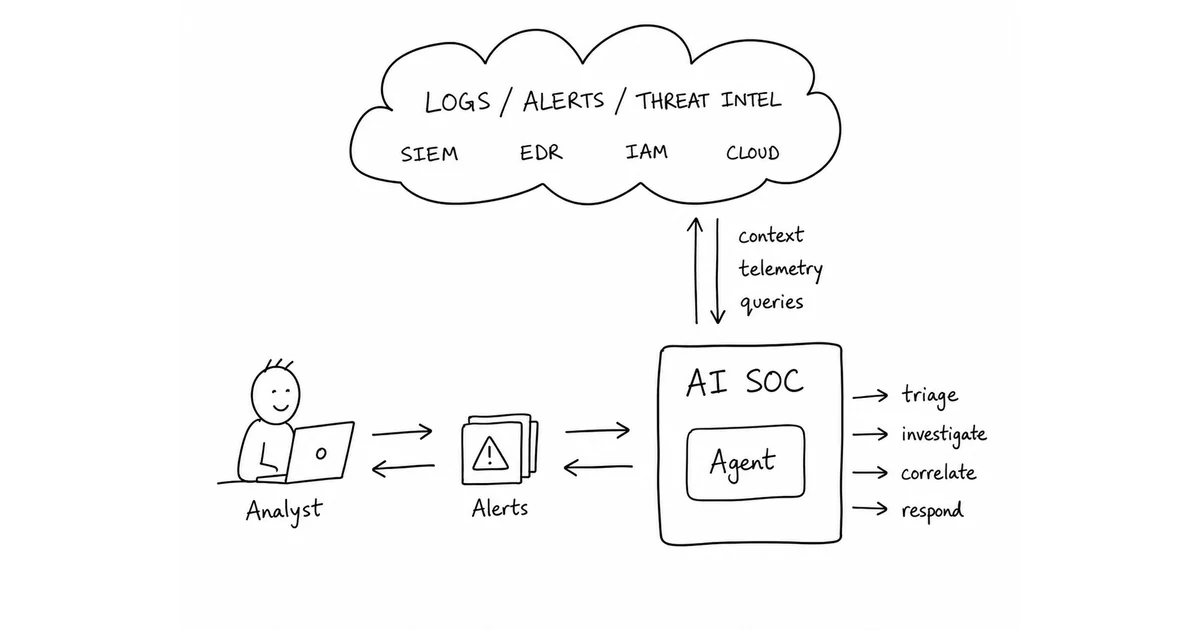
The AI SOC has moved from a product roadmap concept to a working operating model. Google Security Operations now describes agents that triage alerts, investigate threats, hunt for activity, and help drive remediation flows. That is real leverage for a team buried under alert volume. It also gives an agent a path into the systems that describe and change an environment.
A security agent can collect endpoint context from an EDR, search a SIEM, inspect identity data, query cloud posture, and open or close a case. If that same workflow can disable an account, isolate an endpoint, rotate a credential, or alter a detection rule, the question is no longer whether the investigation was useful. The question is whether each proposed action should be allowed in this session, for this tenant, with these arguments.
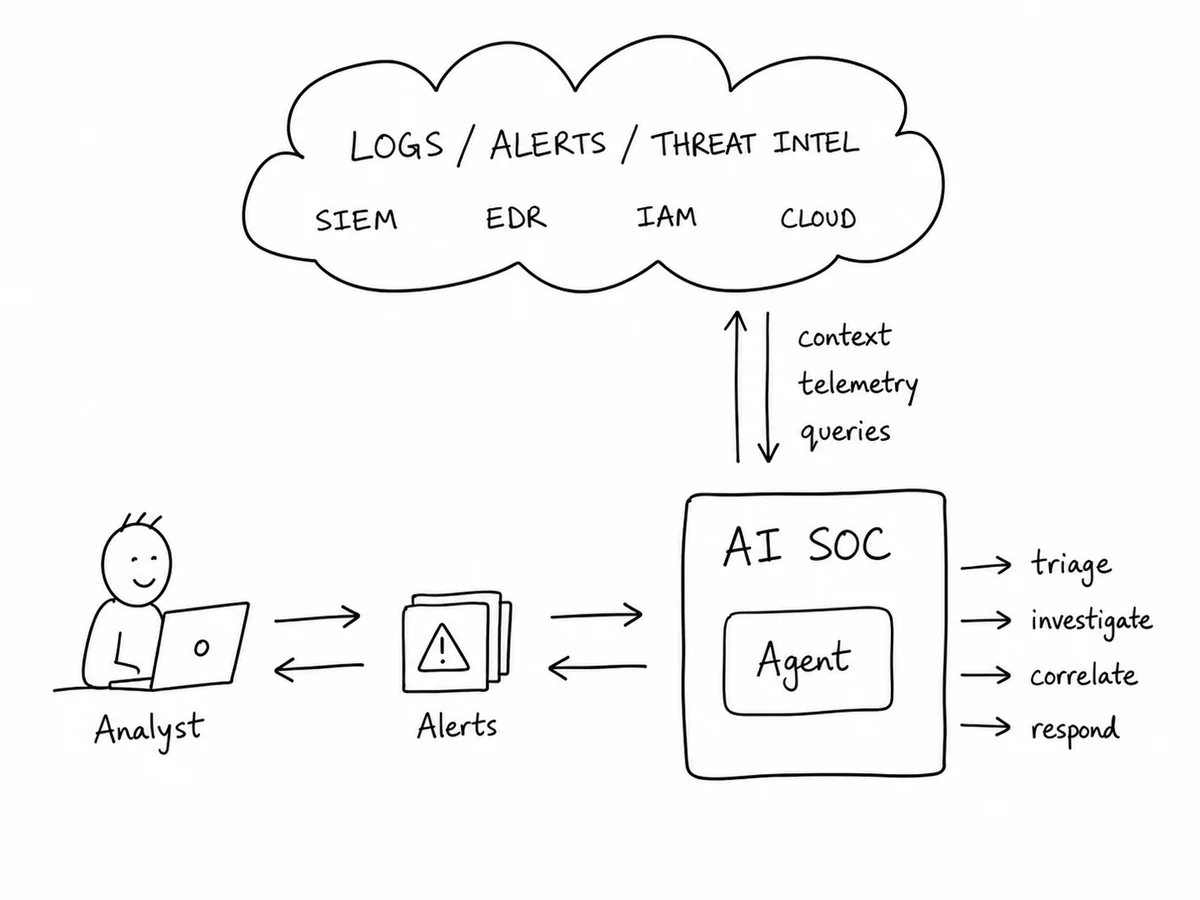
The AI SOC is an execution system
The useful part of an agentic SOC is its ability to work across disconnected evidence. Google’s Triage and Investigation agent, for example, is designed to gather evidence, perform analysis, correlate signals, and return a verdict. Its security operations materials also describe MCP support for connections across an organization’s IT and security environment. That is exactly the shape teams want: an analyst asks a question once and receives a finished investigation instead of a pile of tabs.
It is also a meaningful expansion of the trust boundary. A traditional correlation rule follows a defined query and a defined playbook. An agent interprets evidence, chooses tools, selects arguments, and may sequence several steps before it reaches a conclusion. Alerts, ticket text, email artifacts, threat-intelligence records, and tool responses can all carry untrusted content. Once an agent can translate that content into a privileged API call, it has become part of the incident-response execution path.
Why identity alone does not answer the decision
NIST has put the issue plainly. Its January 2026 request for input on securing AI agents calls out risks from adversarial data, insecure models, and harmful actions, then asks how deployers can constrain and monitor the extent of agent access in the deployment environment. A related NIST identity and authorization concept paper focuses on identification, authorization, auditing, and non-repudiation for software agents. Those are the right foundations.
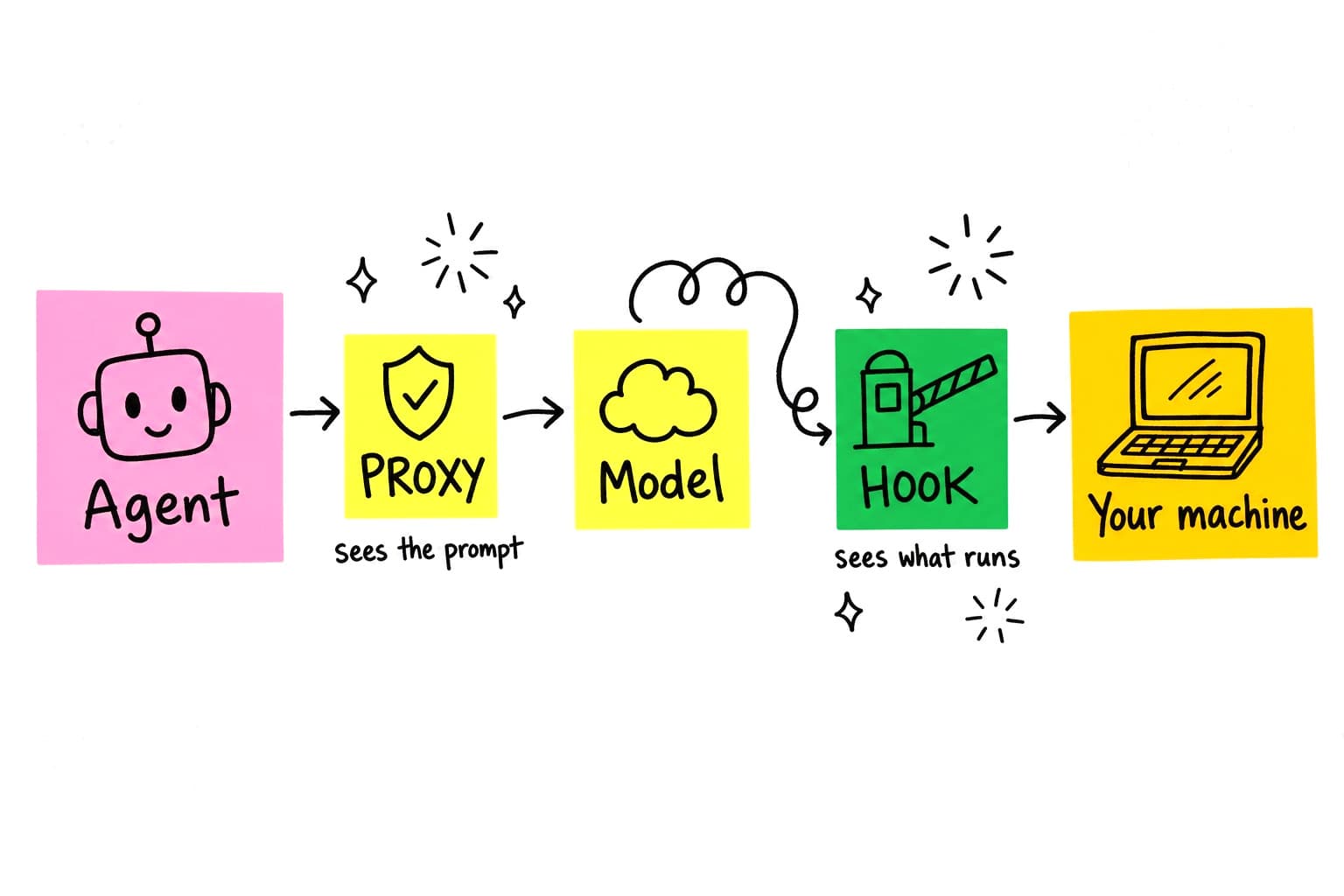
A service identity can establish that an AI SOC agent is allowed to use a cloud, identity, or endpoint API. It cannot by itself establish that a request to suspend a particular executive’s account, isolate a production host, or suppress a newly created detection is appropriate. Those decisions depend on the target, the arguments, the initiating user, the incident state, and the surrounding evidence. Authority must travel with the tool call, then be evaluated at the moment of execution.
What needs a policy boundary
An AI SOC needs broader permissions to investigate than to contain or modify an environment. The policy should distinguish those paths explicitly.
- Read and enrichment operations. Limit searches to approved tenants, indices, time ranges, and data classifications. Redact secrets and personal data before they reach an external model or an unapproved destination.
- Endpoint and identity response. Require explicit authority for actions such as host isolation, user suspension, password reset, token revocation, and group-membership changes. Escalate high-impact targets for human approval.
- Cloud and infrastructure changes. Constrain destructive API calls by account, region, resource tag, and change window. An investigation agent should not inherit unrestricted production administration.
- Detection and case management. Preserve provenance for rule changes, alert closure, ticket updates, and automated verdicts so an analyst can reconstruct what evidence drove the action.
- Remote tools and MCP servers. Allow only registered tools with scoped credentials and known data destinations. Tool descriptions and results are inputs to the agent, so they belong in the threat model as well.
What teams should do
The goal is to keep the speed of an AI SOC while making high-impact actions governable. Start with the evidence path, then put controls where the agent crosses into a tool or system of record.
- Inventory every tool call. Map each agent capability to its data source, credential, destination, argument set, and possible side effect. Include
MCPconnections alongside direct APIs. - Separate investigation from response. Give agents broad read access only where it is justified. Use narrower, time-bound authority for containment and require approval for irreversible or high-blast-radius actions.
- Evaluate arguments at runtime. A policy should inspect the exact command, API method, destination, target resource, and user context before execution. Static role assignment cannot provide that decision by itself.
- Keep an action-level audit trail. Record the agent, initiating user, policy version, tool, arguments, decision, and evidence reference for every sensitive operation. Map detections and tests to MITRE ATLAS where it improves coverage and red-team exercises.
- Begin in observe mode. Measure the actions an agent would take, tune policies against real cases, then enforce the boundaries that are understood and high confidence.
The mature AI SOC will pair capable reasoning with constrained execution. Analysts should receive faster investigations and stronger context. The environment should receive a precise, policy-backed decision before an agent changes it. That is the boundary that lets autonomy improve security operations without quietly expanding operational risk.