An autonomous agent can update a database schema, generate a complex WebGL environment, or coordinate a release workflow. The same access that makes those jobs useful can also let the agent change production state, expose sensitive data, or confidently break a build. Teams encounter the tension quickly: capability and control are coupled.
Static roles, firewalls, and zero-trust rules remain necessary foundations. They do not give teams a complete answer for an agent whose proposed action changes with its task, context, tools, and data. Blanket blocks remove the autonomy that made the workflow worthwhile. Agent governance needs to decide which actions are acceptable at the moment they are proposed.
The real attack surface is the workflow
An agent is an LLM running in a loop with an objective, a harness, a context window, and a set of tools. Its security posture emerges from that whole system. The model provider matters, but so do the instructions that shape the task, the permissions behind each tool, the sources that feed context, and the execution environment where a decision becomes an action.
That context is a large and changing attack surface. Teams routinely pass agents markdown, code comments, tickets, documents, web content, and image alt text. Each source can carry hostile instructions that look like ordinary data. An agent parsing external assets for a 3D scene, for example, could encounter injected directions to alter its output or move sensitive context to an external destination. Legacy controls often miss this path because the request can look valid at the network and identity layers.
Why familiar controls fall short on their own
Several common patterns help in narrow situations, then fail when they become the only control. The gap is real wherever a probabilistic system is connected to data and execution layers.
- Human approval can become habituation. Repeated approval requests for complex, multi-step work create alert fatigue. A reviewer who cannot quickly reconstruct the intent, scope, and consequence of an action is likely to turn approval into a rubber stamp.
- Sandboxes eventually need doors. Isolation is valuable, but useful agents often need data, tools, and execution paths outside a read-only environment. Every necessary exception changes the real boundary, which is why narrowly defined enterprise workflows are easier to govern than open-ended agents.
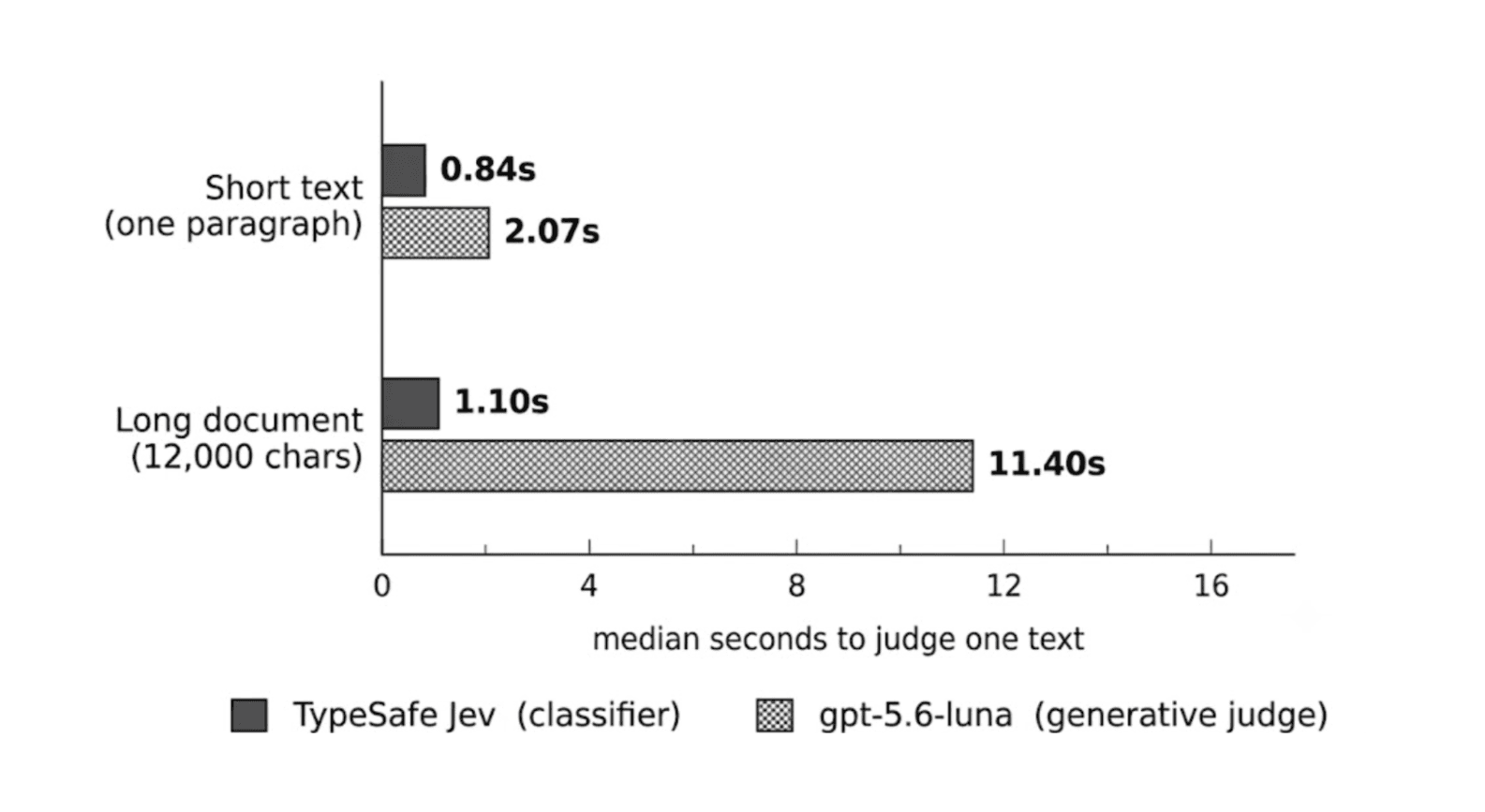
- Agent validation remains probabilistic. A second agent can offer a useful signal about a runner agent’s output. It cannot serve as the final enforcement point. Stochastic reviewers introduce their own non-determinism and can leave teams detached from what their systems did.
Governance is a constrained optimization loop
The practical objective is to maximize the expected value of an agent action while keeping its real-time risk inside the tolerance for the environment:
- Expected value, V(At | C). The benefit of the proposed action at time t, given the agent’s capabilities and the task context.
- Real-time risk, R(At). The action’s exposure after considering its target, arguments, source data, identity, destination, side effects, and the broader workflow state.
- Risk threshold, τ. A boundary that changes with the environment. A low-impact draft may tolerate more autonomy than a production database migration or an outbound transfer of customer data.
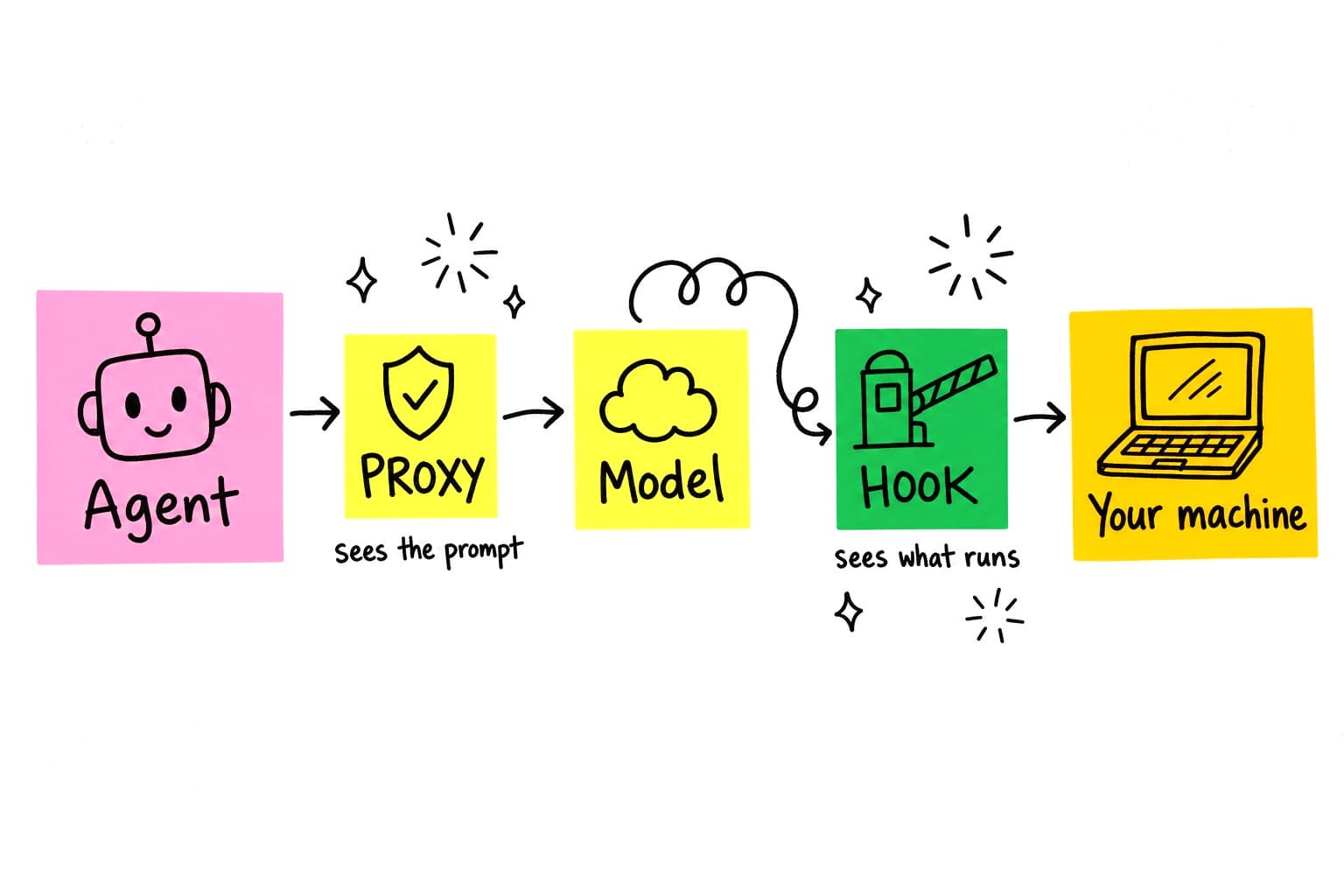
This changes the governing question from “Does this agent have permission?” to “Should this exact action be allowed now?” The answer can still include explicit roles and trusted identities. It also evaluates intent and context where they matter: at the tool-call boundary, before a command, API request, or write operation runs.
Keep engineering comprehension in the loop
The hardest failure mode is the delegation trap. A team can hand work to an agent and gradually hand away its understanding of the architecture, data flows, privileges, and failure paths. No optimization function, approval queue, or scanner can compensate for a team that cannot explain what the agent is allowed to change and why.
Agents are execution tools. They can accelerate complex full-stack work, but engineers still own the system they operate. That ownership means understanding which tools exist, which credentials they use, what data is untrusted, and which actions have irreversible consequences.
What teams should do
Start with the agent’s action path. The goal is to preserve useful autonomy while making each sensitive step explainable, bounded, and enforceable.
- Map the full workflow. Inventory the agent’s context sources, tools, credentials, destinations, and possible side effects. Treat external content and tool responses as untrusted inputs.
- Classify actions by consequence. Separate drafting and read-only work from writes, schema changes, credential access, network egress, and production changes. Give each class an explicit risk threshold.
- Evaluate exact arguments at runtime. Inspect the command, API method, resource, destination, and user or session context before execution. A role alone cannot capture the full meaning of a proposed action.
- Use human review deliberately. Reserve approval for decisions that need judgment and give reviewers a concise explanation of scope, impact, and rollback. Avoid approval prompts that ask people to validate opaque chains of work.
- Maintain an action-level audit trail. Record the agent, initiating user, policy, inputs, tool arguments, decision, and outcome so teams can tune the boundary against real workflows.
Strong agent governance gives teams a way to use capable systems without granting unbounded authority. The right constraint is dynamic, rooted in the action and its context, and backed by an enforcement point outside the model. That is how autonomy becomes an engineering advantage that a team can understand, audit, and control.