AI security splits into two directions that get lumped under one label. The first is protecting AI systems themselves: the models, the training data, the agents that act on your behalf. The second is using AI to protect everything else: anomaly detection, log triage, faster incident response.
Most vendors sell the second kind. Dashboards, baselines, alerts. Useful work, but it doesn't answer the harder question: once an LLM or agent can call a tool, read a file, or hit an API, what actually stops it from doing the wrong thing? AI security for agents has to control the action itself, not just flag it after the fact.
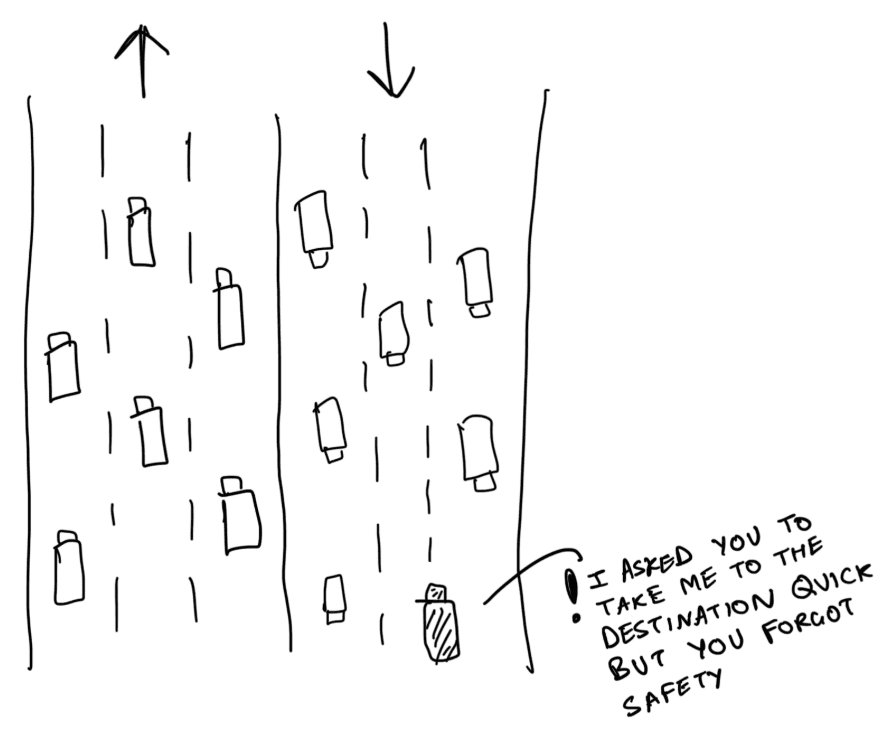
Securing AI vs. using AI for security
These are genuinely different disciplines, and the difference decides who you hire and what you buy.
- Securing AI: defending models and agents against prompt injection, data poisoning, model theft, and excessive agency. The threat targets the AI.
- AI for security: using machine learning to spot anomalies in traffic, logins, or logs. The AI is the defender, not the target.
Where AI security actually breaks down
A handful of failure modes account for nearly every real incident. Skip the abstract framework and look at what actually goes wrong:
- Prompt injection. Instructions hidden in a document, email, or tool response hijack what the model does next.
- Data poisoning. Bad training or fine-tuning data steers the model toward wrong or exploitable behavior.
- Model theft. An attacker rebuilds your weights or logic by querying the model until the outputs give it away.
- Shadow AI. Employees plug unapproved tools and agents into company data with nobody tracking what they can reach.
- Excessive agency. An agent holds more permissions than its task needs, so one bad call has a blast radius nobody sized for.
The controls that actually hold
Governance frameworks like NIST AI RMF and the OWASP Top 10 for LLMs are worth reading. They will not stop a single bad tool call on their own. The controls that hold are the ones enforced at runtime:
- Input and output checks that catch jailbreaks and data leakage before they leave the system.
- A live inventory of every model and agent in use, including the ones nobody officially approved.
- Least privilege for agents: access to exactly the tools and data a task needs, nothing standing beyond that.
- Enforcement at the point where a model takes an action, so a manipulated prompt still can't execute the bad command.
Where Prismor fits
Prismor sits at the tool-call boundary every agent shares, the one place a decision actually turns into a file write, a shell command, or an API request. It intercepts each call, blocks prompt injection and destructive actions before they run, redacts secrets on the way past, and keeps a full audit trail.
That's the part dashboards and dataset scans don't cover. You can watch an agent all day. Enforcement is what stops it.
A crowded field, one boundary
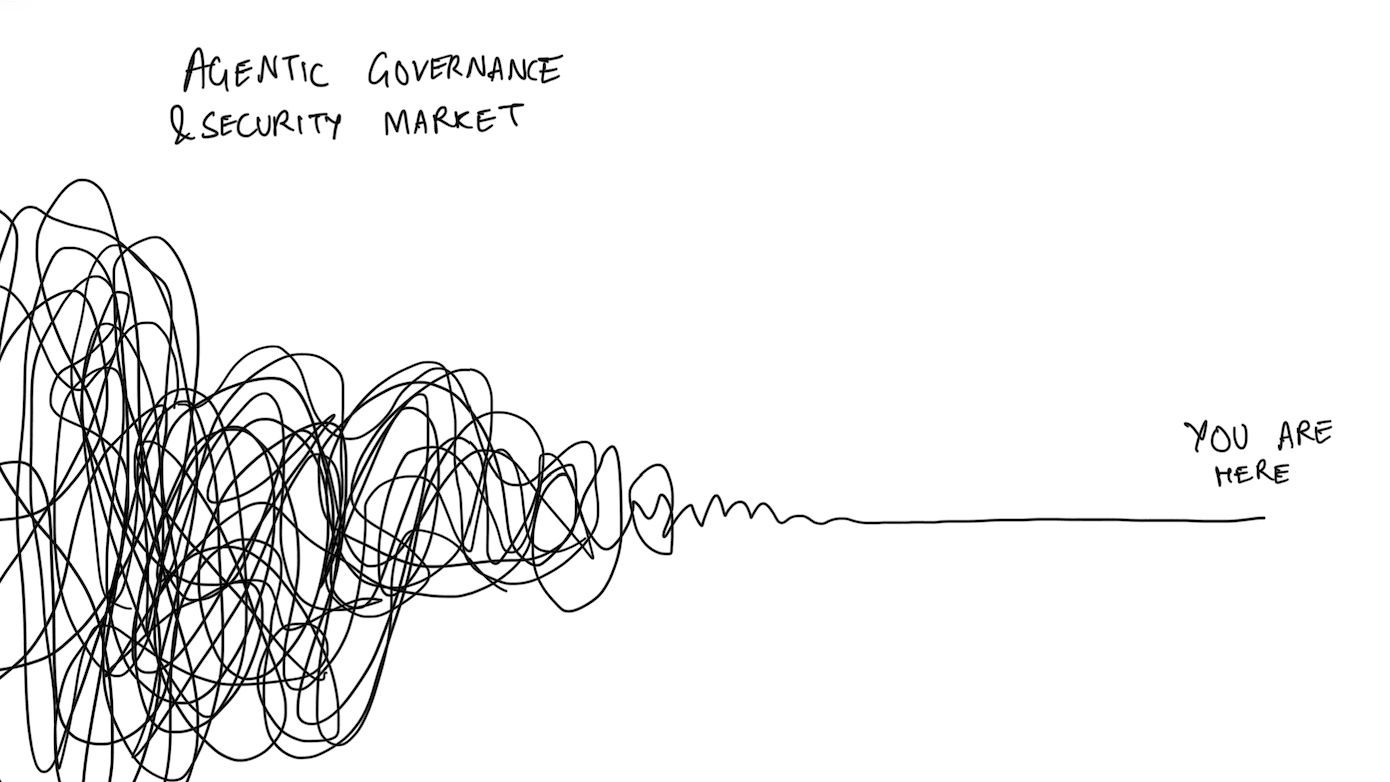
Agent governance is a noisy market, and most of the noise sits upstream of the moment an agent actually does something. Prismor works at the tool call, where the action lands and where a decision still changes the outcome.
Frequently asked questions
What is AI security?
AI security covers two related but distinct jobs: protecting AI systems from threats like prompt injection, data poisoning, and model theft, and using AI to strengthen security elsewhere through anomaly detection and automated response. For AI agents specifically, it means controlling what the agent is allowed to do when it acts.
What is the difference between AI security and securing AI?
"Securing AI" is the narrower half of AI security: defending the model, its training data, and its agents against manipulation. "AI security" as a category also includes using AI-driven tools to detect anomalies and threats across the rest of your infrastructure.
What are the biggest AI security risks right now?
Prompt injection, data poisoning, model theft, shadow AI adoption without visibility, and excessive agency, where an agent has more access than its task requires. Most real incidents trace back to one of these five.
How do you secure AI agents specifically?
Enforce least privilege so each agent only reaches the tools and data its task needs, mediate every tool call through a policy layer that can block or require approval, redact secrets before they reach the model, and keep an audit trail. Enforcement has to happen at the point of action, since prompt-level rules can be talked around.
Is AI security the same as cybersecurity?
AI security is a slice of cybersecurity focused on the risks that come with models and agents: prompt injection, data poisoning, model theft, and agents acting with more access than they should. Traditional cybersecurity still applies underneath. The new part is controlling what an autonomous agent does once it can call a tool.
Want a control plane over your AI agents?
Prismor checks every tool call your agents make against your policy, blocks what breaks it, and keeps the audit trail. Run the open-source runtime yourself, or let us set it up across your org.
Or email [email protected]