MintMCP vs Speakeasy vs Prismor
All three call themselves a control plane. They control different pieces. MintMCP is a managed SaaS gateway for hosting MCP connectors. Speakeasy generates governed MCP servers from your OpenAPI specs and watches the path from prompt to API. Prismor governs everywhere an agent acts: network egress, shell commands, file reads and writes, and memory files like CLAUDE.md that a poisoned instruction can quietly rewrite. MCP is one protocol inside that boundary, not the boundary itself.
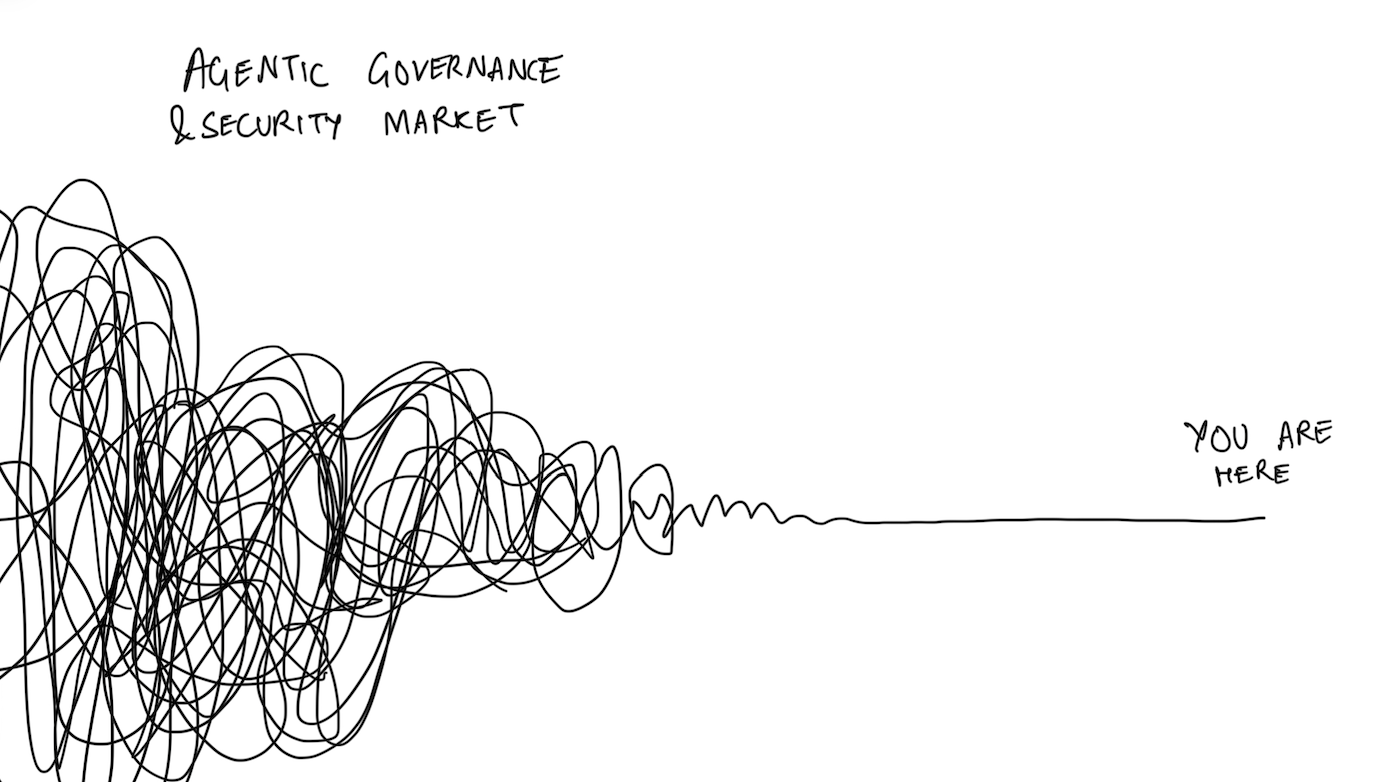
We build Prismor, so read this with that in mind. Every row below comes from each vendor's published docs, verified August 2026. The rows where we lose are marked as clearly as the rows where we win.
| Dimension | MintMCP | Speakeasy | Prismor |
|---|---|---|---|
| What it controls | The network path between an agent and a remote MCP server | The full model path, from prompt to completion to MCP server to backend API | Every agent action: network egress, shell commands, file reads and writes, memory files like CLAUDE.md, and pull requests, MCP calls included |
| Local execution and memory enforcement | Hook scripts log commands and flag sensitive file reads | Policy runs at the API boundary, so local commands sit outside it | Blocks the command before the OS runs it, watches memory files like CLAUDE.md for tampering, and fails closed if policy cannot be verified |
| MCP gateway and catalog | 50+ managed SaaS connectors plus an employee-facing MCP store | Managed connectors plus custom hosted runtimes | MCP Hub fronts 50+ connectors behind one URL, with the same policy as local calls |
| Tool generation from OpenAPI | None. You register server URLs by hand | Compiles typed SDKs and MCP servers straight from your OpenAPI specs | None. Prismor wraps the tools you already run |
| Prompt injection and secret leaks | Secret scanning in transport. No injection detection | Real-time scanning of prompts, completions, and tool payloads | Blocks secret exfiltration and injected tool calls at runtime and at PR time |
| Policy model | SCIM-driven RBAC by user, team, and template. No org/project/repo policy hierarchy | Platform-wide role-based access control. No published tiered floor by org, project, or repo | Org, project, and repo tiers, each able to tighten but never loosen the layer above it |
| Session and agent-level overrides | Global allowlist by role and template. No documented per-session override | Policy managed centrally. No documented per-session override | prismor scope shows, edits, or clears policy rules scoped to one session or one agent, on the machine, without redeploying org policy |
| Network egress control | No published network egress allow/deny control | Enforcement covers API calls. No published per-device egress control | Allow and deny rules by host, port, and scheme, set per org, per user, per device, or per agent |
| Agent cost and usage analytics | Per-user and per-agent audit trails for MCP and coding-agent usage | Cost-by-model breakdowns and human-vs-agent task views across the stack | Not yet. The audit trail shows what ran and what was blocked, not spend by model |
| OWASP Agentic Top 10 mapping | Publishes a mapping through gateway allowlisting and a server registry | Publishes a mapping through inline scanning at the API boundary | Enforces the categories in that framework that live at the local execution boundary, the point those risks actually run, not just in a published mapping |
| Deployment | Managed SaaS first, hosted container runtimes | Cloud control plane with device agents, plugins, and hooks | CLI install on the machine, self-hosting, GitHub Actions |
| Source availability | Commercial, closed | Commercial, with open-source tool integrations | Open-source runtime, free forever, with a paid platform on top. View source on GitHub |
Which boundary does each control plane sit at?
MintMCP and Speakeasy see only the traffic that passes through their own gateway or API layer. Prismor adds a second, wider boundary on the machine itself: every outbound network connection the agent's process opens, every shell command, every file it touches, and the memory files, like CLAUDE.md, that steer its future behavior.
Your coding agent spends most of its day doing things that never reach MintMCP's or Speakeasy's boundary. Claude Code edits a file, curls an internal API directly instead of going through a gateway, greps a config for a token, then pushes a branch. None of that is an MCP call or a request through their proxy, so neither product ever sees it. A control plane that only watches its own gateway traffic has an honest answer here: it secures one channel, not the agent's process.
Prismor installs at the process level and checks each action against policy before it happens, network connections included. That covers the same MCP calls a gateway sees, the raw outbound requests a shell command makes on its own, and local file and memory access no gateway can reach. If you already route everything through remote MCP servers, the gap closes and MintMCP or Speakeasy will serve you well.
Speakeasy makes almost the same argument about MintMCP that we are making about both of them here. Its own Speakeasy vs MintMCP comparison says Speakeasy governs the full AI stack, generates MCP servers straight from an OpenAPI spec, and tracks cost by model across the org. MintMCP, in that same piece, secures the MCP layer with per-user and per-agent audit trails. Read closely and Speakeasy is still describing prompts, completions, and API calls, the traffic that crosses its boundary. A shell command that never leaves the laptop crosses none of it, which is the boundary Prismor is built for.
How does each one stop a dangerous tool call?
Speakeasy scans prompts, completions, and tool payloads in real time and blocks injections and credential exposure at the API boundary. MintMCP allowlists tools per role and logs agent behavior through local hooks, with no injection detection. Prismor stops the command before the OS runs it and fails closed when it cannot verify policy.
The distinction that matters is what happens when detection is wrong. MintMCP hooks log a sensitive file read after it happened, which is useful for an audit and useless for prevention. Speakeasy blocks inline on the request, which works for anything crossing its boundary. Prismor holds the process at the syscall and refuses to continue, so a curl of your .env to a paste site never leaves the laptop.
Prismor policy stacks in three layers, org over project over repo, and the org floor stays enforced no matter what a developer writes in a local config. Run it in observe mode first if you want a week of data before anything blocks. PRISMOR_LOCAL_DRY_RUN=1 gives you the kill switch.
The OWASP Top 10 for Agentic Applications names categories that live at exactly this boundary, where a tool call turns into a real action on a real machine. MintMCP and Speakeasy both publish their own write-ups mapping their controls to that list. Prismor's claim is narrower: enforcement happens at the boundary those categories describe, not in a document about it.
What happens to your MCP servers?
All three front MCP servers. MintMCP hosts 50+ managed SaaS connectors and a public server store. Speakeasy compiles typed MCP servers from your OpenAPI specs. Prismor puts 50+ connectors behind one gateway URL and runs the same policy on an MCP call that it runs on a local shell command.
MintMCP owns this category on breadth. Snowflake, Gmail, Elasticsearch, and roughly fifty more arrive hosted and maintained, and your employees pick from a store rather than filing tickets. Speakeasy owns it on internal APIs, because a governed MCP server generated from an OpenAPI spec is a real engineering shortcut nobody else offers.
Prismor treats MCP as one protocol among several. The MCP Hub aggregates whatever downstream MCP servers you already use behind a single connector. Cursor, Windsurf, Claude Code, and any other MCP client inherit the same policy engine that governs your local shell commands and file access. Prismor enforces on top of the servers you point it at, rather than hosting or maintaining them itself. Pick Prismor for one policy layer across agents and protocols, MCP included. Pick MintMCP if you want the connector catalog itself hosted and maintained for you.
Questions people ask before they choose
Can Prismor protect agents that do not use MCP?
Yes. Prismor sits at the terminal, the framework SDK, and the process, so it governs an agent running bash the same way it governs an MCP tool call.
Can I change what an agent is allowed to do inside a single session?
Yes. prismor scope shows, edits, or clears policy rules scoped to one session or a single agent, directly on the machine. Neither MintMCP nor Speakeasy documents an equivalent, since both manage policy centrally rather than at the point of execution.
Does Prismor control where an agent can send data over the network?
Yes. Egress rules set an allow or deny default plus specific host, port, and scheme rules, scoped to your whole org, a user, a device, or one agent. Neither MintMCP nor Speakeasy publishes network egress control at that granularity.
Is Prismor's policy engine static, or does it improve on its own?
Prismor runs as a self-improving security layer rather than a fixed rule list you maintain by hand. Policy is authored once, then scoped down through org, project, repo, session, and agent as your fleet changes.
Can you run more than one of these together?
Yes, and plenty of teams should. MintMCP or Speakeasy handles the remote connector layer while Prismor covers local execution. They enforce at different boundaries and do not compete for the same hook.
Is Prismor open source?
The runtime is open source and free forever, covering command interception, policy enforcement, secret masking, and a local audit trail. The paid platform adds fleet policy, dashboards, and org-wide audit.
What are good alternatives to MintMCP?
Speakeasy, if you want OpenAPI-native MCP generation and governance across the full model-to-API path. Prismor, if the priority is enforcement on everything an agent does locally, network egress and memory files included, not just the MCP layer.
What are good alternatives to Speakeasy?
MintMCP, if you want a managed SaaS gateway with a large pre-built connector catalog and nothing to install. Prismor, if you need enforcement at the point an agent actually acts, on the machine, rather than at the API boundary.